

What’s In This Guide
- What Does It Mean to Screen In a Covered Patio?
- Ways to Screen In a Covered Patio
- How to Screen In a Deck
- Screen Room vs. Motorized Screen vs. Temporary Enclosure
- How Each Option Affects Comfort
- Weather Considerations for Connecticut and New York Patios
- Why Professional Installation Matters
- Durkin’s Approach to Screening In Covered Patios
- Frequently Asked Questions
- Ready to Screen In Your Patio?
A covered patio already handles the rain and the worst of the sun, but open sides still let in mosquitoes, blowing leaves, and gusts of wind. Screening it closes that gap. Homeowners generally choose between three approaches: a permanent screen room with aluminum framing and mesh panels, a motorized retractable screen that opens and closes on demand, or a temporary enclosure such as clip-on mesh or vinyl curtains for short-term use. Which one makes sense depends on how often the space gets used, how much airflow and view matter, and whether the patio needs to convert back to fully open on nice days.
Quick Facts
- Screening in a covered patio adds a mesh or panel barrier along the open sides while keeping the existing roof and structure intact, sitting between a fully open patio and a full glass enclosure.
- Permanent screen rooms offer aluminum framing and low maintenance, best suited to patios used often or year-round.
- Motorized retractable screens open and close on demand, with side-retention systems generally the better choice for insect control.
- Temporary enclosures (mesh or vinyl curtain panels) cost less and require less commitment, but offer lower durability and less consistent protection.
- Decks often need extra framing support since they lack the evenly spaced posts a ground-level patio has.
- Permit requirements vary by municipality and should be confirmed locally before starting a project.
- Professional installation ensures the frame fits the existing patio structure and, for motorized systems, that the tracks align correctly.
What Does It Mean to Screen In a Covered Patio?
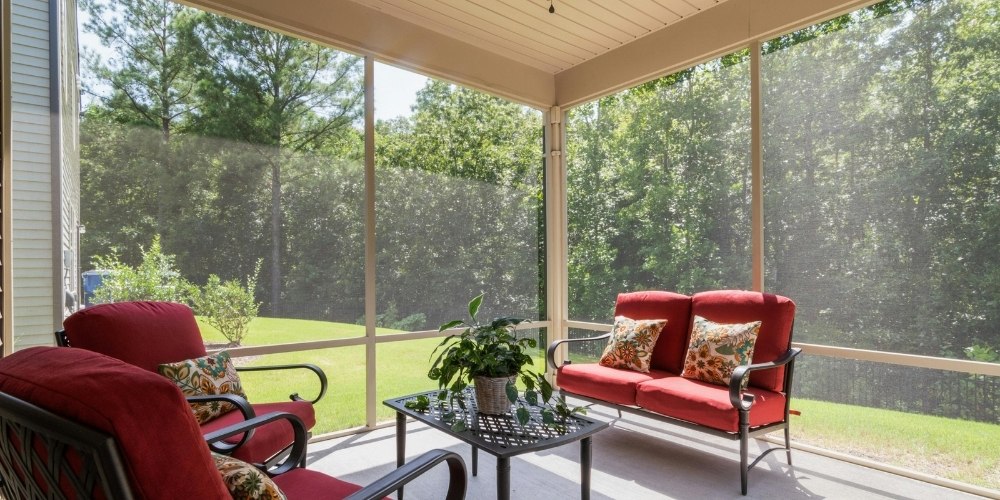
A covered patio has a roof, but no walls. Screening it in adds a mesh barrier along the open sides, usually running between existing posts or columns, so the space becomes semi-enclosed without losing the structure already in place. This is different from a full glass enclosure, which blocks wind and rain along with insects, and different from leaving the patio open, which offers no barrier at all. Screening sits in the middle: it keeps airflow moving while filtering out what most homeowners actually want to avoid, namely bugs, leaves, and pollen.
Ways to Screen In a Covered Patio
Permanent Screen Rooms
A screen room uses fixed aluminum framing with mesh panels installed between the patio’s existing posts or a new perimeter frame. It is the most durable option and requires the least upkeep over time, which makes it a strong fit for households that use the patio regularly or entertain outdoors through most of the season. Because the framing is permanent, the space functions like a dedicated outdoor room rather than a feature that needs to be set up or taken down. Durkin’s builds screen rooms as part of its Leisure Room lineup, designed and installed to fit the dimensions and structure of the existing covered patio.
Motorized Retractable Screens
Retractable screens roll down from a housing mounted at the top of the opening and can be raised or lowered as conditions change. This gives homeowners the option to fully open the patio on a calm evening and close it off when insects or wind become an issue. Side-retention screens, which guide the mesh along a track on either side of the opening, are typically the better choice when insect control is the main goal. Cable and track screens are also available and work well for managing sun and glare, though they are generally not the preferred system when keeping bugs out is the priority.
Temporary or Seasonal Enclosure Options
For homeowners who are not ready to commit to a permanent structure, clip-on mesh panels, canvas curtains, or clear vinyl drop panels can screen a patio on a seasonal or as-needed basis. These options work well for renters, patios used only a few months a year, or anyone testing whether a screened space fits their routine before investing in something permanent. The tradeoff is durability and consistency: temporary panels generally offer less insect protection than a built screen room and need to be installed and removed by hand each season.
How to Screen In a Deck
Decks introduce a few differences worth planning around. Because a deck sits above grade, it often lacks the evenly spaced posts a ground-level patio has, so a screen room may need additional support posts or a frame anchored to the deck’s railing system rather than to the concrete slab. The screening options themselves (screen room, retractable screen, or temporary panel) still apply, but the framing has to account for the deck’s structure, height, and how the railing ties into the overall design.
Screen Room vs. Motorized Screen vs. Temporary Enclosure
| Option | Best For | Insect Control | Flexibility | Maintenance |
|---|---|---|---|---|
| Permanent screen room | Frequent, year-round use | High | Fixed, always screened | Low |
| Motorized retractable screen | Homeowners who want an open-air option | High with side-retention systems | Opens and closes on demand | Moderate |
| Temporary curtain or panel enclosure | Seasonal or short-term needs | Lower | Manual setup and removal | Higher (seasonal handling) |
How Each Option Affects Comfort
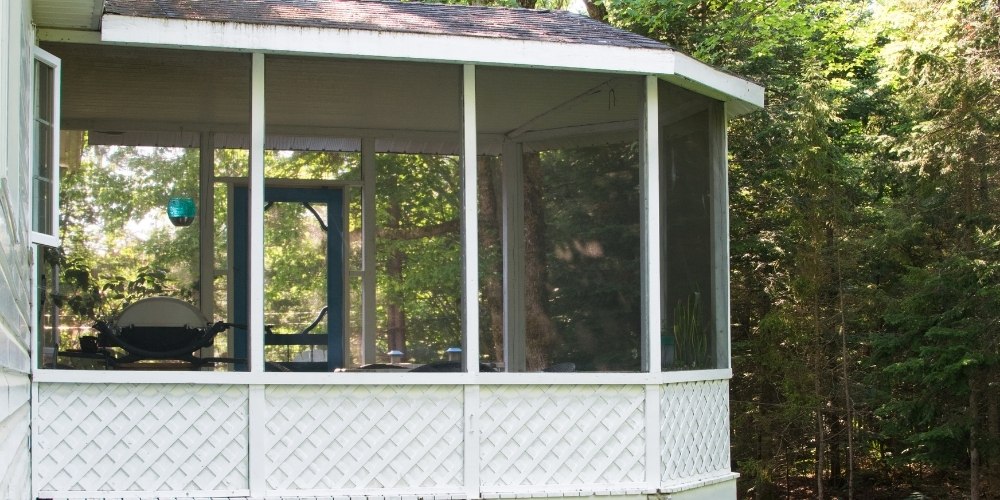
Screening changes more than just bug exposure. Shade, airflow, and how much control the household wants over the space all shift depending on which system is installed.
Permanent screen rooms hold a consistent line of shade and a steady barrier against wind-blown debris, since the framing doesn’t move once it’s installed. Comfort stays predictable day to day, but the space can’t be opened back up for a fully unobstructed view.
Motorized retractable screens trade some of that consistency for control. The screen can stay fully open for airflow on a mild day or come down to cut glare and block insects in the evening, so comfort adjusts to the weather and the occasion rather than staying fixed.
Temporary panels offer the least protection of the three. They cut down on bugs and light wind, but they hold up less reliably in stronger gusts and don’t provide the same year-round consistency as a fixed system.
The right fit usually comes down to how much the household values a set-it-and-forget-it space versus one that can be adjusted on demand.
Weather Considerations for Connecticut and New York Patios
New England weather shifts quickly from season to season, which matters when deciding how a covered patio should be screened. Permanent, aluminum-framed screen rooms are built to stay in place through the changing conditions typical of Fairfield County and the surrounding areas. Temporary curtain-style enclosures, on the other hand, are usually removed and stored during the off-season rather than left up through winter weather. Anyone considering a screening option should confirm the specific product’s rated performance and seasonal recommendations with the installer, since exposure varies by property and by system.
Why Professional Installation Matters
Fitting a screen system to an existing covered patio isn’t a one-size-fits-all job. A few factors determine how well the finished system performs:
- Structural fit. The new framing has to match the current roofline, posts, and slab or deck structure rather than being forced onto it.
- Track alignment. For motorized screens, the tracks need to be aligned precisely so the screen retracts smoothly without binding.
- Tensioning and weatherproofing. Getting these right the first time affects how long the system lasts and how well it holds up against wind and moisture.
- Load assessment. A professional evaluation confirms whether the existing patio structure can support a permanent screen room as-is or needs reinforcement first.
READ MORE : Fixed Screens vs Motorized Screens for Patios: Which Option Works Best?
Durkin’s Approach to Screening In Covered Patios
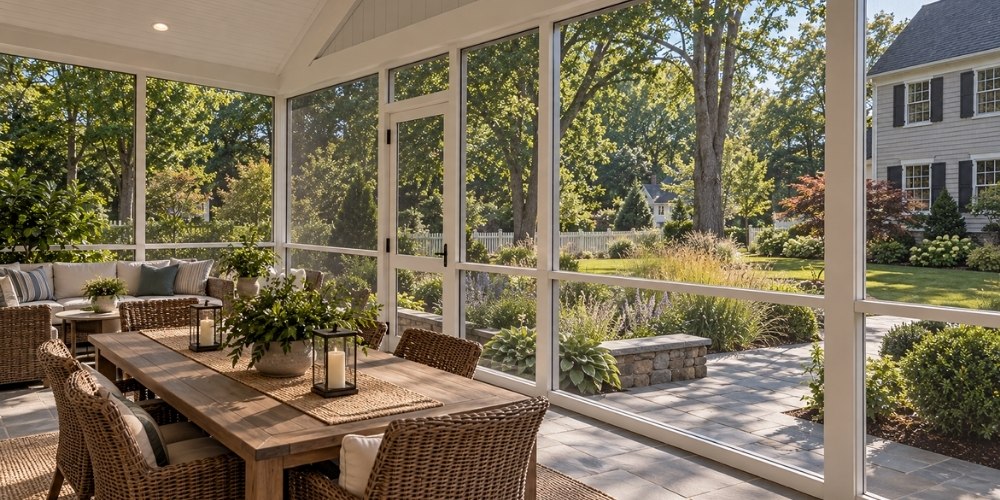
Durkin’s has designed and installed outdoor shading and enclosure systems from its Danbury facility for more than a century, and its current Leisure Room lineup includes screen rooms built specifically for covered patios and similar spaces. The team also offers motorized exterior screen systems for homeowners who want the option to open and close their patio rather than commit to a fixed enclosure. Each project starts with an assessment of the existing structure, so the finished screen system fits the patio’s actual posts, roofline, and layout rather than a generic template.
Frequently Asked Questions
Can a covered patio be screened in without building a permanent structure?
Yes. Motorized retractable screens and temporary curtain or panel systems can screen a patio without altering its existing framing, though they generally offer less durability and consistency than a permanent screen room.
Does screening in a patio require a permit?
Permit requirements vary by municipality and by the scope of the project. Homeowners should check with their local building department before starting any patio enclosure project.
Can existing patio posts support a screen room?
It depends on the spacing, condition, and structural capacity of the existing posts. A professional evaluation is the best way to confirm whether the current structure can support a screen room or needs additional framing.
What’s the difference between a screen room and a full porch enclosure?
A screen room uses mesh panels to block insects and debris while keeping airflow open. A more built-out enclosure typically adds glass or vinyl panels for greater protection from wind, rain, and cold, at the cost of some of the open-air feel a screen room preserves.
Ready to Screen In Your Patio?
Whether the goal is a permanent screen room or a motorized screen that opens and closes as needed, Durkin’s can evaluate your existing covered patio and recommend a system that fits its structure and how you use the space.
Contact Durkin’s to request an estimate.


