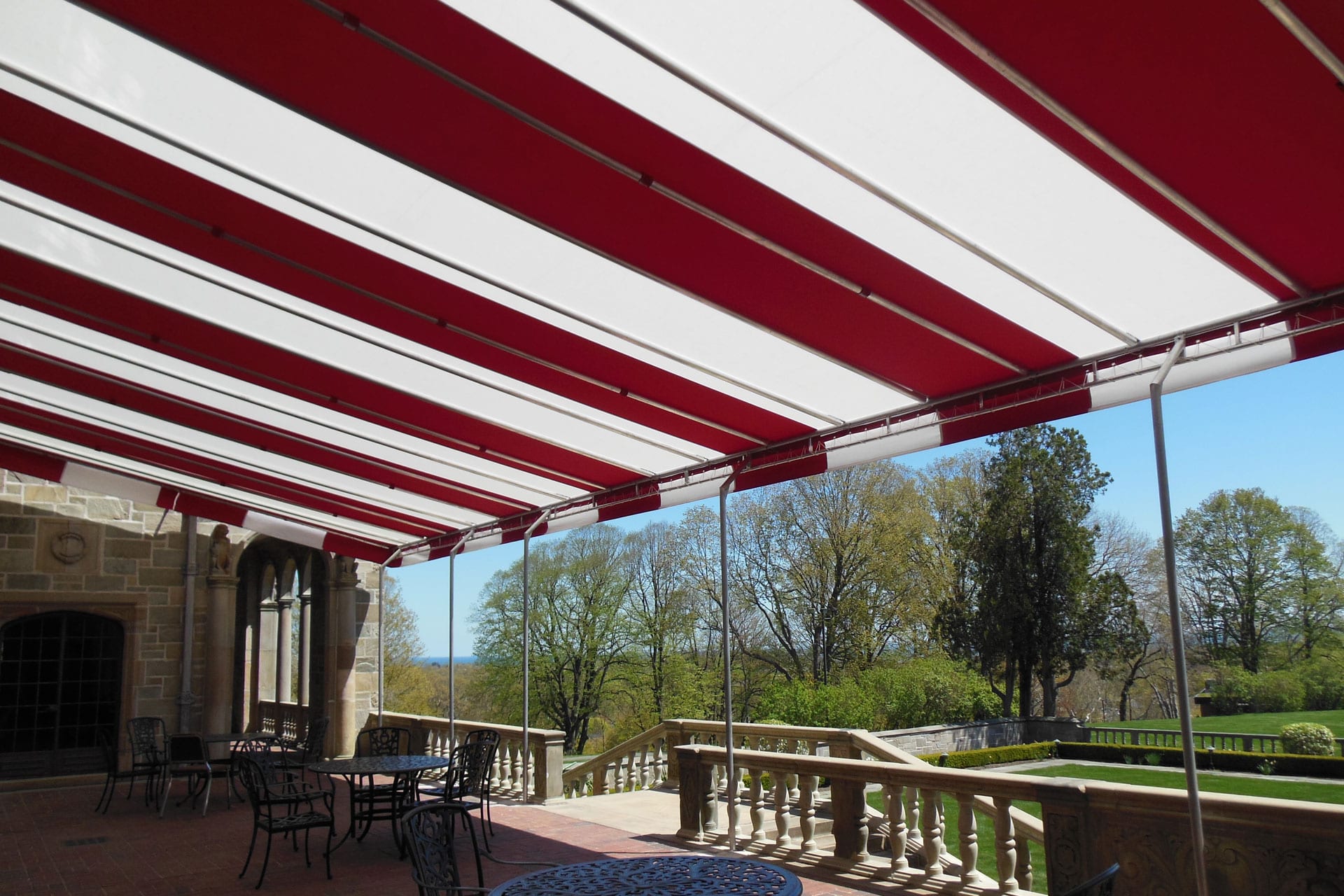
Awnings can instantly make your home more comfortable, more energy-efficient, and more enjoyable—if you choose the right type for your space and Connecticut’s weather.
If you’ve ever abandoned your patio because it’s too hot, watched your living room bake in afternoon sun, or replaced outdoor furniture sooner than you should have, awnings are worth a serious look. The right awnings create shade where you need it most, protect your home’s exterior, and help you get more use out of your deck or patio. But they’re not perfect for every home, and not every material or design holds up equally well in New England conditions.
Highlights✔ Awnings make patios and decks more comfortable and usable during hot, sunny months.✔ The biggest advantages are shade, UV protection, and improved indoor comfort near windows and doors. ✔ The biggest disadvantages are upfront cost, weather exposure, and maintenance, depending on the material type. ✔ Metal awnings emphasize durability, while fabric awnings offer more customization and softer design options. ✔ In Connecticut, proper installation and weather-ready design choices are essential for long-term performance |
Inside This Guide
What Are Awnings and Why Homeowners Use Them
Advantages of Awnings for Homes: Why You Should Buy
Disadvantages of Awnings: What You Should Consider Before Buying
Choosing the Best Outdoor Awning for Your Space (Patio, Deck, or Entire House)
What to Look for When Hiring a Local Installer
Are Awnings Worth It for Connecticut Homeowners? (Cost vs. Value)
Frequently Asked Questions About Awnings
Get the Right Awning for Your Home in Connecticut
What Are Awnings and Why Homeowners Use Them
Awnings are protective coverings installed over windows, doors, patios, decks, or outdoor seating areas. They’re designed to provide shade, reduce direct sun exposure, and add a layer of shelter from light weather. For homeowners, the appeal is simple: awnings improve comfort, protect your home and belongings, and often make outdoor spaces usable for more of the year.
Awnings can be fixed or retractable, fabric or metal, and built to cover everything from a small window to an entire patio. Some are purely functional, while others are chosen as architectural features that add curb appeal and complement a home’s exterior style.
4 Common Types of Awnings for Residential Homes
Fixed awnings
These stay in place year-round and are built for durability. They’re common over windows, doors, and smaller outdoor areas.
Retractable awnings
These extend when you want shade and retract when you don’t. Retractable models are popular for patios and decks because they offer flexibility and can be retracted in high wind or heavy storms.
Manual vs. motorized
Manual systems operate by hand and tend to cost less. Motorized systems add convenience and may include wind sensors for protection.
Fabric vs. metal awnings
Fabric awnings provide softer, customizable style choices. Metal awnings emphasize long-term durability, especially for entryways and windows.
Advantages of Awnings for Homes: Why You Should Buy
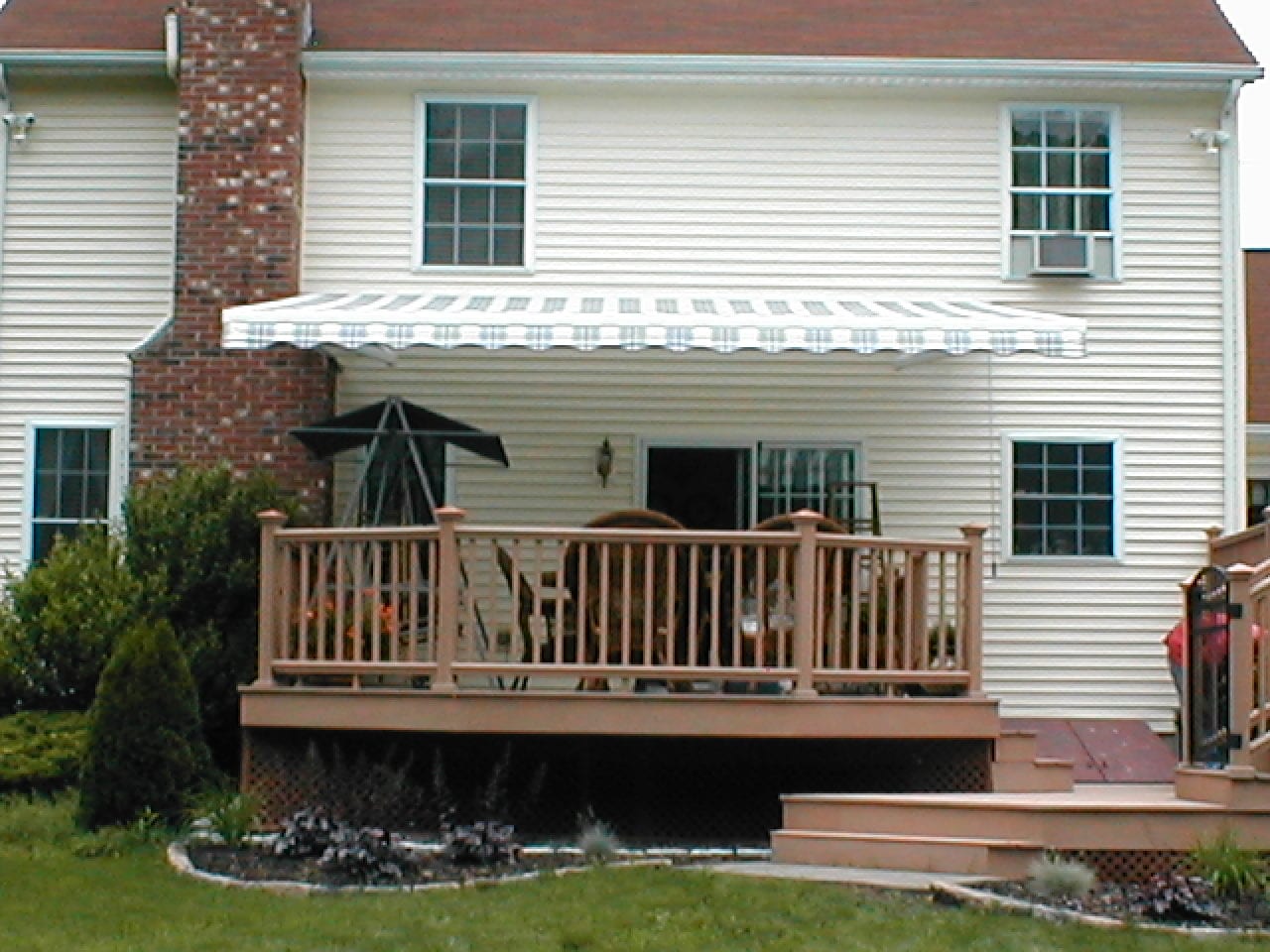
Awnings are a smart home upgrade that boosts comfort, protects exterior surfaces, and improves how you use your outdoor space. With the right size, placement, and material, awnings can deliver both immediate lifestyle benefits and long-term value.
Better Outdoor Comfort for Your Patio or Deck
The biggest benefit is shade. An awning for patio areas can lower temperatures and cut glare, making outdoor seating more comfortable during peak sun. An awning for deck coverage is especially useful for decks exposed to strong afternoon sunlight. It creates a cooler, more usable space for meals, gatherings, or relaxing outside.
Protection From Sun, Light Rain, and UV Damage
Sunlight doesn’t just heat your space. It damages what’s in it. UV exposure fades cushions, dries wood finishes, and wears down doors, windows, and trim. Awnings for house exteriors help protect these surfaces by blocking direct sunlight. They also provide light rain coverage, which helps keep entryways and furniture drier when the weather shifts.
Potential Energy Savings (Especially in Connecticut Summers)
Window and door awnings reduce heat buildup by shading glass before sunlight enters your home. Rooms with west- and south-facing windows often feel noticeably cooler, which can reduce reliance on air conditioning.
Improved Curb Appeal and Home Value
Awnings add visual structure and character to a home, especially when they match the architecture and color scheme. Many homeowners use awnings to create a more cohesive exterior while also adding functional shade.
More Usable Outdoor Living Space
Awnings turn open patios and decks into comfortable outdoor “rooms.” If your patio feels too hot to use regularly, a well-placed outdoor awning can make it functional again.
Disadvantages of Awnings: What You Should Consider Before Buying
Awnings aren’t perfect for every home. The main drawbacks come down to cost, weather exposure, maintenance, and choosing the wrong design for your exterior.
Upfront Cost and Installation Investment
The main downside is the initial investment. Price depends on awning size, material, mounting surface, and whether it’s fixed, retractable, or motorized. Larger patio systems cost more, and motorized upgrades add convenience—but increase cost.
Weather Concerns: Wind, Heavy Rain, and Snow
Connecticut weather matters. Wind can strain poorly installed awnings. Retractable models are a popular choice because they can be closed during storms. Fixed awnings need strong mounting and professional design to handle seasonal exposure. Snow and ice also require planning, especially for year-round installations.
Maintenance Needs by Material
Maintenance depends on the type:
- Fabric awnings may need cleaning, mildew prevention, and eventual fabric replacement.
- Metal awnings tend to need less upkeep but may require cleaning and occasional refinishing over time.
- Motorized systems may need periodic servicing for motors or sensors.
Design Limitations and Permitting
Not every home layout supports every awning style. Rooflines, mounting surfaces, and placement can limit options. Some neighborhoods also have HOA rules or permitting requirements. Proper slope and drainage are essential to prevent water issues.
Style Mismatch Can Hurt Curb Appeal
If awnings are the wrong size, color, or shape, they can look awkward and take away from the home’s architecture. The best awnings for house exteriors look intentional, balanced, and custom-fit, not like a quick add-on.
Choosing the Best Outdoor Awning for Your Space (Patio, Deck, or Entire House)
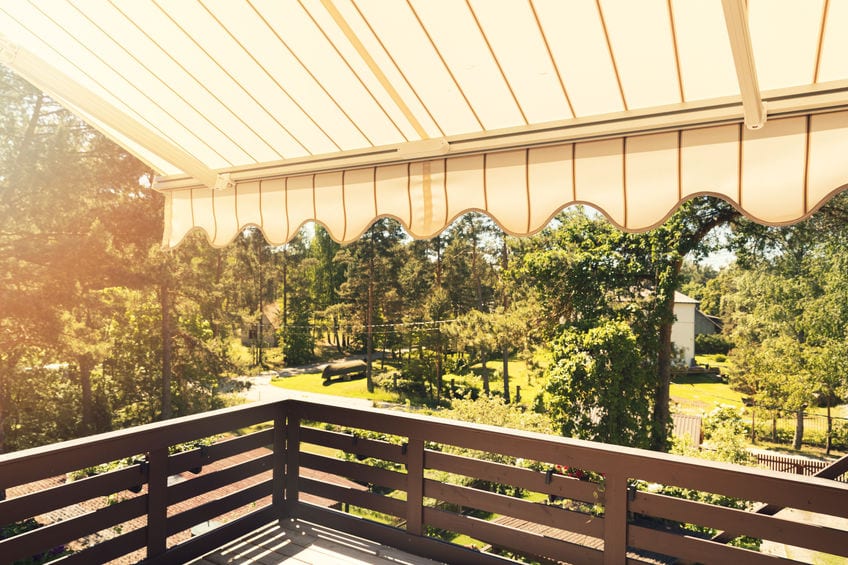
Choosing an outdoor awning is about matching coverage needs, weather exposure, and your home’s layout. The best results come from selecting an awning that complements the house and performs well through Connecticut’s seasonal shifts.
Awnings for Patio vs. Awnings for Deck: What’s Different?
| Feature | Awnings for Patio | Awnings for Deck |
| Primary purpose | Comfort + entertaining | Shade + functional coverage in exposed areas |
| Typical size | Often wider to cover larger seating areas | Varies, but may require custom sizing due to elevation and layout |
| Best placement | Over patios, outdoor dining sets, lounge areas, grills | Over elevated decks, especially those with direct afternoon sun |
| Installation complexity | Usually more straightforward | Often requires more planning due to height and wind exposure |
| Wind exposure | Often moderate, depending on yard layout | Frequently higher due to elevation and open exposure |
| Structural support needs | Commonly mounted to the exterior wall with stable support | May need reinforcement or specialized mounting, especially near walkout basements |
| Runoff considerations | Easier to manage with the correct slope | More critical due to height, pitch, and drainage direction |
| Best awning type | Retractable or fixed, depending on use | Often retractable for flexibility and storm safety |
Key Features to Look For When Choosing an Awning
| Feature | Why It Matters | Best For |
| Retractable vs. fixed | Retractable offers flexibility; fixed offers consistent coverage | Retractable for patios/decks, fixed for windows/doors |
| UV resistance + fade protection | Prevents fabric fading and prolongs awning life | Fabric awnings and homes with strong sun exposure |
| Proper pitch for drainage | Prevents water pooling and sagging | All awnings, especially large patio/deck coverage |
| Custom sizing and placement | Ensures balanced coverage and better curb appeal | Patios, decks, and unique home layouts |
| Wind considerations | Higher wind areas need safer designs and stronger installation | Elevated decks and open backyard spaces |
What to Look for When Hiring a Local Installer
Searching for “awning companies near me” is common because homeowners want someone who understands local weather, building styles, and proper installation methods. Choosing the right installer often matters as much as choosing the right awning.
Why Choosing a Local Company Matters (Especially in Connecticut)
Local installers understand how Connecticut’s weather affects outdoor structures. Wind exposure, seasonal storms, and fluctuating temperatures all influence what will perform best. A local company can also provide better guidance on placement, materials, and maintenance recommendations that match the climate.
Red Flags to Avoid
- No clear warranty or service policy
- Limited experience with residential awnings for patio and deck use
- Vague pricing without details on materials and installation
- Recommendations that ignore wind exposure and weather conditions
- Low-cost options that sacrifice durable mounting and structural support
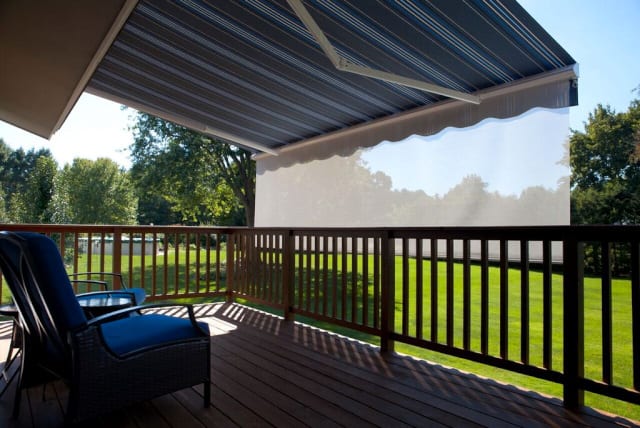
Are Awnings Worth It for Connecticut Homeowners? (Cost vs. Value)
For many Connecticut homeowners, awnings are worth it because they directly improve daily comfort and protect the home’s exterior and interiors from sun damage. Whether they’re the right choice for you depends on how you use your outdoor space and how much direct sun your home receives.
When Awnings Are a Smart Investment
Awnings make the most sense when you use your patio or deck frequently, have rooms that overheat from direct sunlight, or want to protect furniture and finishes from fading. Homeowners who love outdoor living often see immediate value because awnings create a more comfortable space without needing a full remodel.
Awnings for house exteriors also make sense when curb appeal matters. They can add a finished, custom look while serving a functional purpose.
When Awnings Might Not Be the Best Fit
Awnings may be less appealing if your home is highly exposed to wind and you don’t want retractable features, if you rarely use your outdoor areas, or if you prefer a shade solution that requires no seasonal care. Maintenance expectations also matter; fabric awnings look great, but they need cleaning and care to stay in top shape.
Frequently Asked Questions About Awnings
The best awning depends on your space and weather exposure. Retractable awnings are often best for patios and decks because they offer flexible shade and can be closed during storms. Fixed awnings work well over doors and windows for year-round coverage, while metal awnings are a great choice for homeowners who want long-term durability and low maintenance.
For many homeowners, yes. An awning for patio shade can make outdoor spaces usable during hot afternoons and help create a more comfortable place to entertain. In Connecticut, retractable options are especially helpful because they offer flexibility as the weather changes.
An awning for deck installation often needs more wind consideration due to elevation and exposure. Patios typically have more stable mounting conditions, while decks may require additional planning for support, slope, and coverage.
Metal awnings generally last longer and require less fabric-related maintenance. Fabric awnings offer more design flexibility and a softer appearance, but they may need periodic cleaning and eventual replacement.
Look for experience with residential installations, clear warranties, customized sizing, and installers who understand Connecticut weather conditions. Ask for examples of past work and recommendations tailored to your home’s exposure and layout.
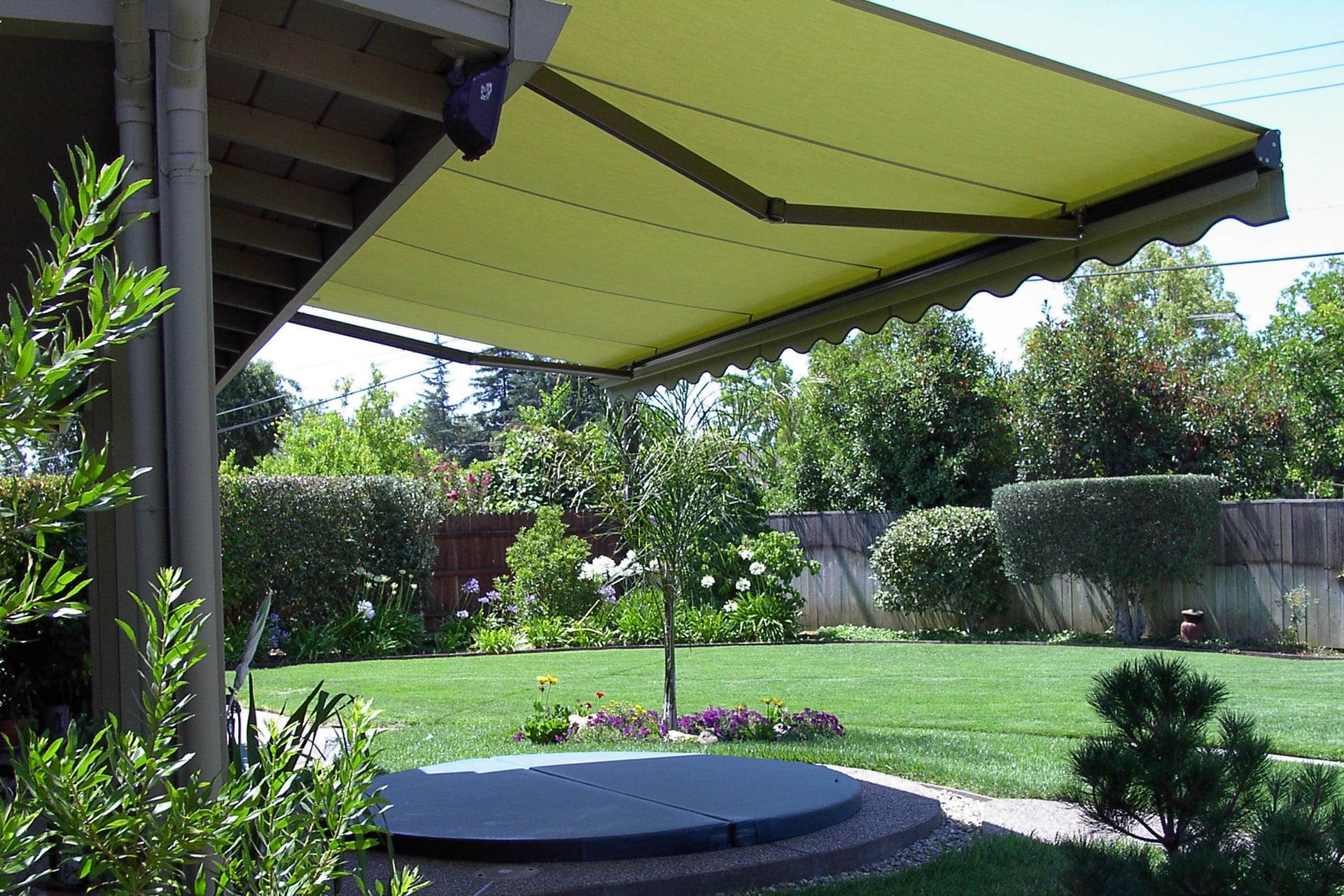
Get the Right Awning for Your Home in Connecticut
The difference between an awning you love and one you regret usually comes down to smart design choices and professional installation. That’s where Durkin’s Inc. comes in. As a trusted Connecticut provider, Durkin’s helps homeowners choose awnings that look great, perform reliably, and hold up to New England weather, whether you’re covering a patio, deck, windows, or entryway.
Get your free quote today!